
If you’re planning a remodel or trim upgrade, one of the first decisions you’ll face is material: MDF or hardwood? It sounds like a simple choice, but the right answer depends on the room, your budget, your finishing plans, and how much wear and tear the molding will be exposed to. Understanding the strengths of each material can save you time, money, and frustration down the road.
What Is MDF Molding?
MDF stands for medium-density fiberboard. It’s an engineered wood product made from compressed wood fibers and resin, and it’s become one of the most widely used materials for interior molding and trim. Paint-grade MDF molding is extremely consistent in density and surface texture, which means it takes paint exceptionally well — often better than natural wood. There are no knots, grain variations, or voids to fill before finishing, so the painting process is cleaner and faster.
MDF is also more dimensionally stable than solid wood in many indoor environments, meaning it’s less likely to expand, contract, or warp due to minor temperature and humidity changes. For these reasons, it’s a favorite among professional contractors who want a reliable, cost-effective trim option for large-scale interior projects.
The one area where MDF requires some caution is moisture. In rooms with high humidity or the potential for water exposure — bathrooms, laundry rooms, or areas near exterior doors — standard MDF can swell or deteriorate over time if not properly sealed and painted.
What Is Hardwood Molding?
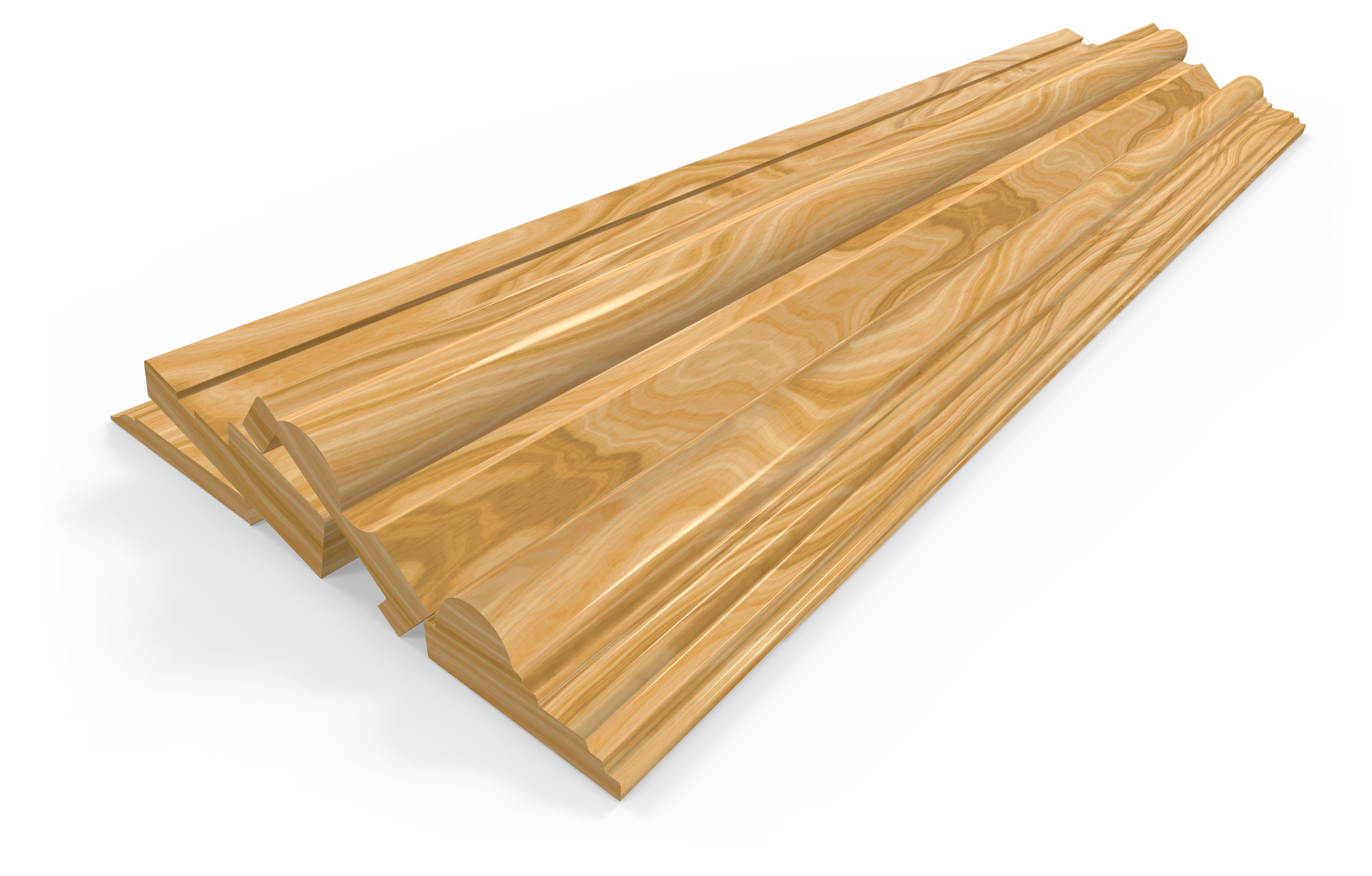
Hardwood molding is milled from natural wood species such as oak, maple, pine, poplar, and others. It offers a warmth and character that engineered products can’t fully replicate, and it’s the go-to choice when the goal is a stained or natural wood finish. If you want the grain of the wood to be a visible part of the design — as is common in craftsman, traditional, or rustic interiors — hardwood is the clear choice.
Hardwood molding is also more durable in high-traffic or high-contact areas. Baseboards in hallways, door casings, and chair rails in busy living spaces tend to hold up better in solid wood when they’re subject to regular bumps, scuffs, and cleaning.
The trade-off is cost and finishing complexity. Hardwood typically runs higher in price than MDF, and achieving a smooth painted finish requires more surface preparation to account for grain and any natural imperfections.
How to Choose by Room
For most interior living areas, bedrooms, and common spaces where you plan to paint your trim, paint-grade MDF molding delivers excellent results at a lower cost per linear foot. It’s an especially smart choice for large trim packages where consistency and efficiency matter.
For kitchens, bathrooms, and other moisture-prone spaces, look for moisture-resistant MDF options, or consider switching to a hardwood species that handles humidity better. For any room where a stained finish is part of the design plan, hardwood is the way to go.
Talk to the Experts at Clark’s Moulding & Doors
At Clark’s Moulding & Doors, we carry an extensive in-stock selection of both paint-grade MDF and hardwood molding, with over 250 profiles to choose from across more than one million linear feet of inventory. Whether you’re a contractor working through a full remodel or a homeowner tackling a single room, our team is here to help you make the right call.
Visit our facility or call (626) 575-8343 today to find the perfect molding for every room in your home.